
Oxidation of secondary Alcohols

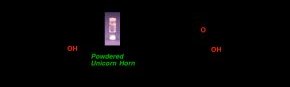
Oxidations Of Alcohols With “Eye Of Newt”, “Wing of Bat”, and “Powdered Unicorn Horn”
Here we are, at least fifteen articles into this series on alcohols, and all we’ve really talked about is substitution and elimination reactions, with a little bit of acid-base chemistry mixed in.
We haven’t even scratched the surface of one of the most important classes of reaction for alcohols – one that becomes crucial as you move into Org 2.
I’m talking about oxidation reactions.
What do I mean by an “oxidation reaction”, anyway?
Let’s start by examining the bonds that form and the bonds that break in this process, where we convert a primary alcohol to an aldehyde:
[ No, “Eye of newt” doesn’t actually do oxidation reactions: I’m being a bit coy with exact reagents for now, because as I’ll explain in a bit, there are so many different reagents for oxidation of alcohols that many students get spooked by the fact that they look unfamiliar and fail to actually pay attention to the important part: the bonds that form and break in the reaction! ]
The key process here is that we’re forming a C-O bond and breaking a C-H bond on the same carbon. That’s a sure sign of an oxidation reaction. For more background on oxidation reactions in organic chemistry, check out this when I learned organic chemistry. The reagents that were given to us might have well been “eye of newt” and “powdered unicorn horn” since they were introduced without any background or context and disappeared just as quickly after the section on oxidation was over.
It was only later that I understood that oxidation is not nearly as complicated as these weird reagents make it seem. In fact, the underlying process is in most cases extremely familiar – it’s just not taught that way!
In the next post, we’ll discuss the common – and very familiar! – mechanistic step that (almost) all oxidation reactions you’ll learn have in common. Not only will oxidation reactions then become less mysterious.
Note: it’s an oversimplification because the first step in oxidation of an aldehyde is generally addition of water to form a hydrate, which is then oxidized to the carboxylic acid. Some oxidants we call “weak” (e.g. CrO3, pyridine) can thus be “strong” if water is present. It’s a teaching kludge, but good enough for our purposes, for now.

You might also like


|
HumanoLabs Garcinia Cambogia Health and Beauty (HUMANOLABS™-Built to be Different)
|


 The oxidation of secondary alcohols to ketones is an important oxidation reaction in organic chemistry.
