
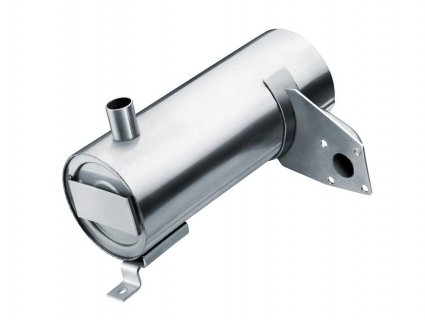
Diesel oxidation Catalysts
This is a preview of the paper, limited to some initial content. Full access requires DieselNet subscription.
to view the complete version of this paper.
Abstract: Diesel oxidation catalysts promote chemical oxidation of CO and HC as well as the SOF portion of diesel particulates. They also oxidize sulfur dioxide which is present in diesel exhaust from the combustion of sulfur containing fuels. The oxidation of SO2 leads to the generation of sulfate particulates and may significantly increase total particulate emissions despite the decrease of the SOF fraction. Modern diesel oxidation catalysts are designed to be selective, i.e., to obtain a compromise between sufficiently high HC and SOF activity and acceptably low SO2 activity.
Catalytic Reactions
The diesel oxidation catalyst (DOC) owes its name to its ability to promote oxidation of several exhaust gas components by oxygen, which is present in ample quantities in diesel exhaust. When passed over an oxidation catalyst, the following diesel pollutants can be oxidized to harmless products, and thus can be controlled using the DOC:
- carbon monoxide (CO),
- gas phase hydrocarbons (HC),
- organic fraction of diesel particulates (SOF).
Additional benefits of the DOC include oxidation of several non-regulated, HC-derived emissions, such as aldehydes or PAHs, as well as reduction or elimination of the odor of diesel exhaust.
The emission reductions in the DOC occur through chemical oxidation of pollutants occurring over the active catalytic sites. These processes can be described by the following chemical reactions.
(1)[Hydrocarbons] + O2 = CO2 + H2O
(1a)CnH2m + (n + m/2)O2 = nCO2 + mH2O
(2)CO + 1/2O2 = CO2
Hydrocarbons are oxidized to form carbon dioxide and water vapor, as described by reaction (1) or—in a more stoichiometrically rigorous way—by reaction (1a). In fact, reactions (1) and (1a) represent two processes: the oxidation of gas phase HC, as well as the oxidation of SOF compounds. Reaction (2) describes the oxidation of carbon monoxide to carbon dioxide. Since carbon dioxide and water vapor are considered harmless, the above reactions bring an obvious emission benefit.
However, an oxidation catalyst will promote oxidation of all compounds of a reducing character; some of the oxidation reactions can produce undesirable products and, in effect, be counterproductive to the catalyst purpose. Oxidation of sulfur dioxide to sulfur trioxide with the subsequent formation of sulfuric acid (H2SO4), described by reactions (3) and (4), is perhaps the most important of these processes.
You might also like



|
Equate Maximum Strength Diaper Rash Relief, 16 oz Baby Product (Equate)
|

|
Equate Diaper Rash Relief Maximum Strength 16 Oz (2 pack) Health and Beauty (Equate)
|



|
Diaper Rash Ointment to Prevent and Treat Diaper Rash Generic for Desitin Maximum Strength 40% Zinc Oxide 2 oz. per Tube Pack of 12 Health and Beauty (SHEFFIELD)
|

|
Aquaphor Baby Healing Ointment, Advanced Therapy, 14 Ounce Jar (Pack of 2) Health and Beauty (Aquaphor)
|

|
Desitin Maximum Strength Original Diaper Rash Paste 4 oz tube (Pack of 3) Health and Beauty (Johnson & Johnson Consumer Care Products)
|


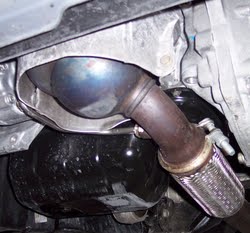 A diesel particulate filter (or DPF) is a device designed to remove diesel particulate matter or soot from the exhaust gas of a diesel engine. Wall-flow diesel particulate filters usually remove 85% or more of the soot, and under certain conditions can attain soot removal efficiencies of close to 100%. Some filters are single-use, intended for...

