Fast Oxidative fibers
My quest began, as the juiciest ones often do, with a question.
When working toward balance with someone with scoliosis, which side is actually the weaker side? I’ve been studying my own scoliosis for two years now, since I took a “Yoga For Scoliosis” yoga teacher training and found out that my back is curvy. On this question of muscle strength in scoliosis, the jury seemed to be out.
Some systems suggested one strengthen the concave (the inward curving or sunken side) side, theorizing that the muscles on this side are “pulling” the vertebra together while pushing it apart on the convex side (where you often see the hump of expanded ribs or rotated vertebrae). Other systems recommend strengthening the convex (expanded) side, in order to train the musculature to push the spine back toward center and pull the expanded side closer to the midline. So which is it?
I researched medical studies (most of which involve comparing different kinds of braces and, worse still, different types of surgeries) and finally came across one that seems to zoom in on this very issue. The study involves comparing samples of biopsies of paraspinal muscles obtained during surgery from 14 females with scoliosis against a control group of nine females without scoliosis volunteers. The results fascinate me. But first, a physiology detour.
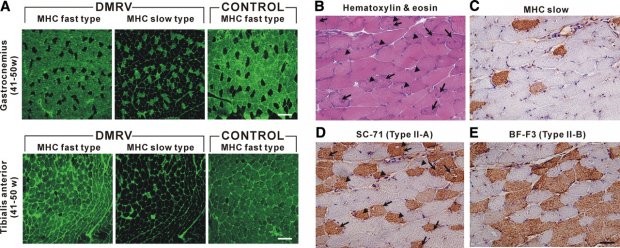
For our purposes, there are two types of muscle fibers: slow-twitch (technically called slow-twitch oxidative or postural muscle fibers) and fast-twitch (fast-twitch, glycolytic also called phasic muscle fibers). There are also slow-twitch, oxidative-glycolytic muscles – but we’ll focus mainly on the first two types.
You might also like


|
BW Technologies GAXT-E-DL GasAlert Extreme Ethylene Oxide (ETO) (C2H4O) Single Gas Detector, 0-100 ppm Measuring Range, Yellow BISS (Honeywell International, Inc)
|